How to make a clinical flowchart or decision algorithm
A good clinical algorithm turns a complex management path into something you follow with a finger. It's the kind of figure that becomes an on-call reference. Describe the scenario and thresholds and get a clean, publication-ready decision flowchart.
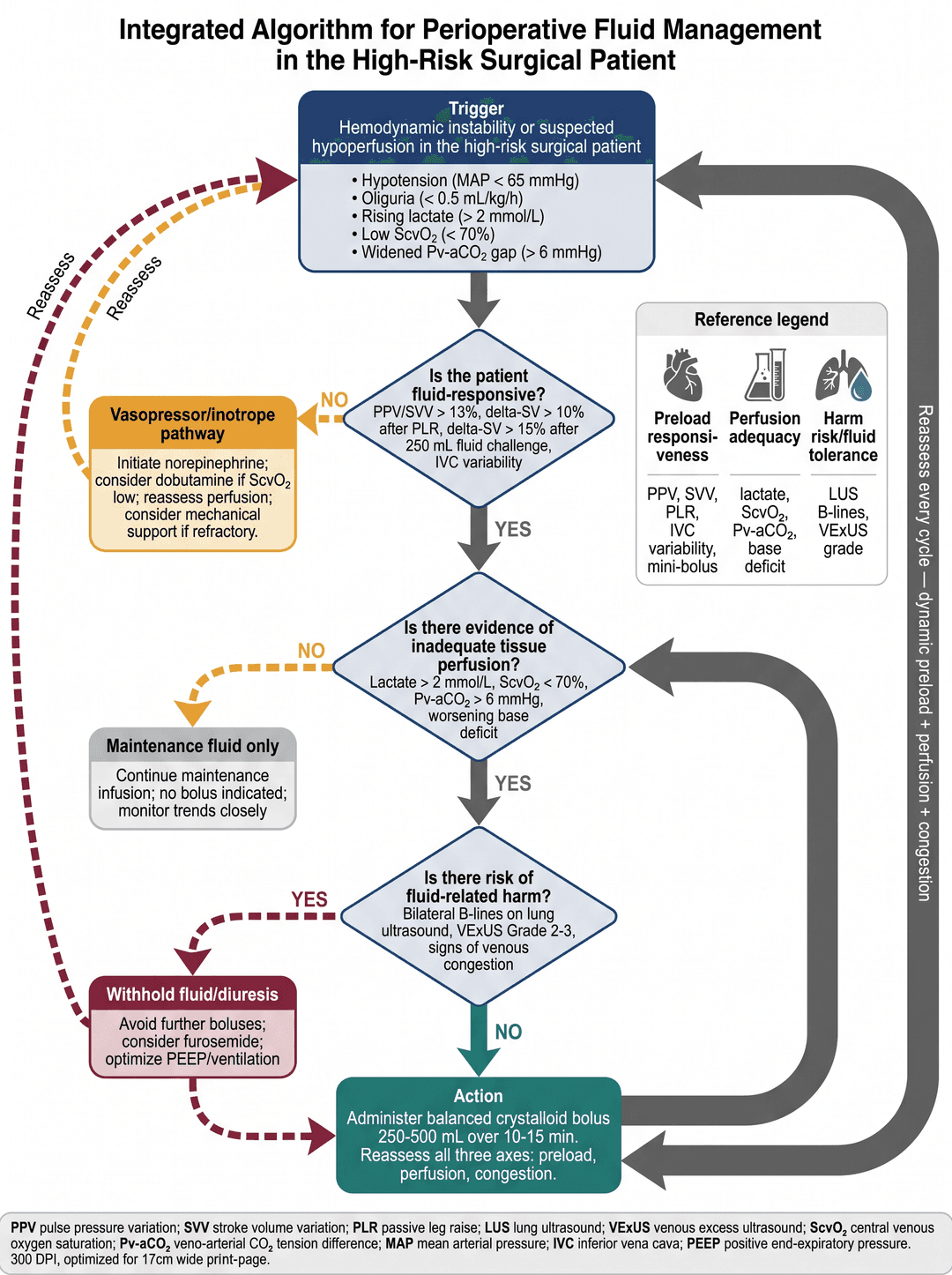


What a clinical algorithm is
It's a decision flowchart: a trigger at the top, a sequence of decisions (diamonds) with real quantitative criteria, and management boxes at the end of each branch. Yes/no arrows guide the reader down the right path, and 'reassess' loops show that management is dynamic.
What a good algorithm needs
A clear vertical decision spine, real thresholds inside the diamonds (e.g. 'MAP < 65 mmHg', 'lactate > 2 mmol/L'), colors by role (trigger, decision, action, escalation, stop), and labeled branches. Even spacing and short headers — the reader has to find their case instantly.
Mistakes that kill an algorithm's usefulness
Vague criteria ('if stable…') instead of thresholds; unlabeled branches; too many boxes with no hierarchy; and no reassessment point. An algorithm exists to be followed under pressure — if it creates doubt, it fails its job.
- 1Describe the scenario and thresholds
e.g. "intraoperative hypotension management: trigger MAP < 65, check volume (PPV > 13%), then vasopressor, reassess".
- 2The assistant builds the flow
It constructs the decision spine, the diamonds with your thresholds, colors by role, and reassessment loops. You review it before spending a credit.
- 3Generate and export
Get it in seconds and download PNG, TIFF 300 DPI, or PDF — for the paper, the protocol, or the on-call poster.
Build your clinical algorithm now
Describe the scenario and thresholds and get a publication-ready decision flowchart. No subscription — pay only for what you use.
Start a new figure